Alex Molčan opens his Rolex Shanghai Masters campaign against Federico Cina in the first round. On court, the job is simple: win and advance. On the screen, Robinhood and other prediction markets have already listed a game-spread contract on the match – a market on the game differential across the full meeting, not just who wins. Sky Sports is carrying the match, Tennis.com is running live scores and statistics, and the Shanghai draw has a number attached to it before the first ball. For Molčan, none of that changes the assignment: get through one round.
Alex Molčan is a Slovak professional on the men’s tour, and his name turns up in two very different kinds of searches.
He is in Shanghai for the Rolex Shanghai Masters. The singles draw has 96 players, and the 32 seeds receive byes into the second round, so his opening match is the first round.
Across the net is Federico Cina, an Italian who came through qualifying. The match is listed as Molčan vs Cina, first round, ATP Shanghai.
What makes it a search trend is the coverage around it. Tennis.com lists a live score and match statistics for the pairing. Sky Sports includes the match in its Shanghai broadcast lineup. Prediction platforms run markets on it: one on the outright winner, another on the game spread across the full match.
So while Molčan tries to get through one round, plenty of people are watching a number move.
Who Is Playing What: Molčan vs Cina, Side by Side
| 亚历克斯·莫尔坎 | 费德里科·奇纳 | |
|---|---|---|
| 选手身份 | Slovak professional tennis player | Italian qualifier, first-round opponent |
| 赛事名称 | Rolex Shanghai Masters | Rolex Shanghai Masters |
| 轮次 | First round | First round |
| 公开信息渠道 | Tennis.com (live score, statistics, broadcast info), Sky Sports (live coverage), Robinhood (prediction market contracts) | Same channels as the match itself: Tennis.com, Sky Sports, Robinhood |
The table lays out the basics: who is playing whom, at which tournament, in which round, and where the coverage sits. It is not a case for either player’s chances. Molčan opens a 96-player draw against Cina in the first round. Tennis.com carries the live score and stats, Sky Sports has the broadcast, and Robinhood runs the prediction-market contracts.
What “Game Spread” Actually Means
Most tennis markets ask one question: who wins? That is the moneyline, or 胜负盘, and it turns on a single outcome.
A game spread works differently. It does not care who wins; it cares about the margin in games once the last ball is struck. A straight-sets win can come by 6-0 6-0 or by a pair of tiebreaks – twelve games or two. The record book writes the same word either way, but the number underneath is very different.
When Molčan’s match gets its own spread market, the contract asks one thing: what will the game differential be across the full match? Not “did he win,” but “by how many games.”
The two markets can pull in opposite directions. A favorite can win comfortably while the spread tells a tighter story, and an underdog can lose and still cover. The moneyline rewards being right about the result; the spread rewards being right about the shape of the match.
Both are prediction-market contracts, which means people trade on what they expect to happen rather than stake money on a guaranteed outcome. Nobody can promise a return, and a spread says nothing about how the match will go. It is one more way of looking at the same afternoon of tennis, counting games instead of wins.
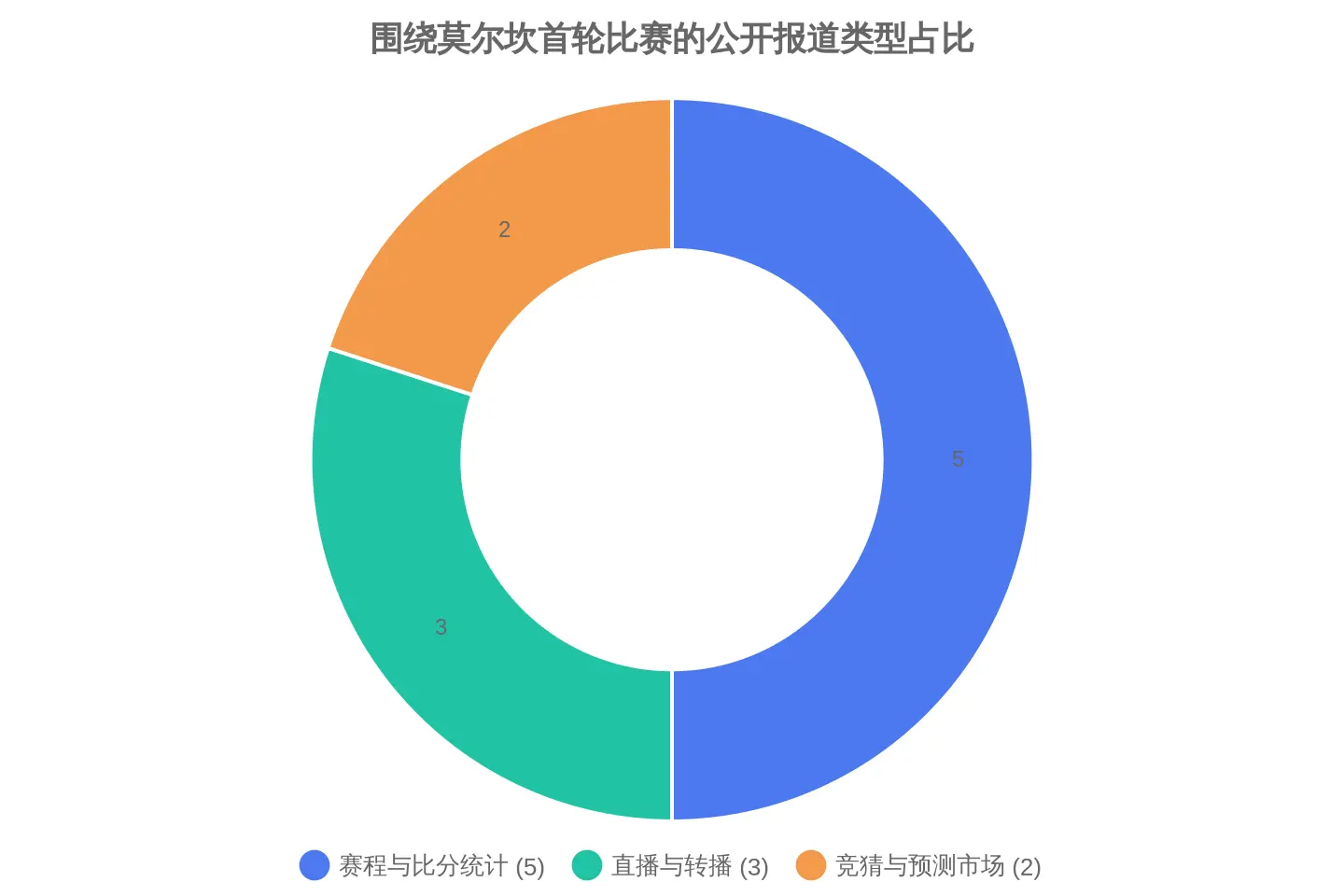
The chart groups coverage of the match into three types. Schedule and score statistics make up the largest share, five sources or 50%. Live broadcast comes next with three sources, 30%. Betting and prediction markets account for the remaining two, 20%.
How a Game Spread Actually Settles
Settlement is mechanical. For a best-of-three match, the order of operations is:
- Tally the games. Count every game each player won across the whole match – not sets, not points, just games.
- Find the net gap. Subtract the smaller number from the larger. That is the game differential.
- Line it up with the contract. Compare the differential with the spread agreed on beforehand: does it clear the number, land on it, or fall short?
- Read the result. Whichever side of the line the final differential falls on is the outcome, applied the same way to both sides.
- Official score gets the last word. If anything looks fuzzy – a retirement, a corrected scoreboard – the tournament’s official match record settles it.

Molčan and the market are not playing the same match.
On court, the job is simple: beat Cina and advance. A tidy straight-sets win and a scrappy three-set grind that drags into a final-set tiebreak count the same. If his name lands on the right side of the scoreboard, he has done it.
Off court, part of the audience is watching a different scoreboard. On Robinhood and elsewhere, the market covers not only who wins but the game spread – the exact differential between the two players across the whole match. Those buyers are rooting for margins: a 6-4 6-3 instead of a 7-6 6-7 7-6, precision that has nothing to do with advancing.
That is the mismatch. A player’s objective is “win the match.” A bettor’s objective is “win the match by this much.” The two overlap only by accident.
A line does not change how tennis works. Molčan will play to win, not to cover, because chasing a margin instead of a victory is a good way to lose both. The scoreboard that decides who reaches the second round does not care about anyone’s ticket.
It is the first round. The task is to win the match.

A single first-round match can dominate search for an hour because everything happens at once. The Sky Sports feed starts, the Tennis.com scoreboard ticks point by point, and the prediction markets open within the same window. Someone checking Molčan’s live score finds a game spread sitting next to the stream, and the name gets searched again as the match unfolds. One tab for the broadcast, one for the stats, one for the odds.
The same pattern pulls in other players. Fans working through an ATP draw rarely stop at the headline name; they wander across the bracket and look up someone like Rei Sakamoto while they are there, or check results from another court. It is one habit, not several: chasing the live window where scores, streams, and lines all refresh together.
A few things to keep in mind
-
Treat prediction markets as one more piece of information rather than a guaranteed payday. The odds reflect a crowd’s guess, not the final score.
-
Know what you are looking at: a win-loss market only asks who takes the match, while a game spread tracks the margin. A player can win and still miss the spread.
-
Read the settlement rules and cutoff times before the first serve. Some contracts settle on the official score; others stop taking entries earlier than you would expect.
-
Lean on the official scoreboard and the live broadcast as the final word, not a social post or a widget that still shows yesterday’s numbers.
-
Keep your involvement at a level you would be fine losing. A small side bet should not turn a first-round match into a stressful afternoon.
FAQ
What’s the difference between a game spread market and a moneyline market?
A moneyline market asks who wins the match. A game spread market, like the one listed for Molčan versus Cina, asks what the game differential will be across the full match. One centers on the winner, the other on the margin.
Why is there a prediction market for a first-round match?
The Rolex Shanghai Masters is a large event with a big field, so markets get listed for individual matches rather than only the tournament as a whole. Robinhood carries separate listings for the Molčan vs Cina match winner and for the game spread. A first-round match gets its own listing the same way later rounds do.
Where can I follow the live score and broadcast?
Tennis.com offers a live score, statistics, and broadcast info page for the first-round match between Molčan and Cina. Sky Sports also lists the match in its live coverage of the Rolex Shanghai Masters 2026.
Who is Molčan’s first-round opponent?
Alex Molčan faces Federico Cina in the first round. The two are scheduled as part of the tournament’s opening round.