Kelly Clarkson went to a Brooklyn design shop on Oct. 10 and came away saying she had been treated like the Julia Roberts character in Pretty Woman. She did not keep that to herself.
The singer and former daytime talk-show host posted on X that she had “drove all the way to Brooklyn to check out this store I thought looked really rad and had a few things in mind to buy and literally was looked at as if I couldn’t afford it and was told he could find something comparable for me.” She named the store: Art of Play, on Atlantic Avenue. “Wow, dude,” she wrote. “You’re an idiot and just lost a huge sale.”
Art of Play answered a day later, and its account turns on one object. In an Instagram statement on Oct. 11, the store said Clarkson had asked about buying “Molly,” a one-of-a-kind singing and dancing bird automaton that appears in the magic shows the shop hosts. Molly, the store said, is attached to the wall and is not for sale. The statement added that the “negative experience Kelly described” would resonate with anyone who has ever felt judged in a shop, and that it was strange to be the focus of so much anger “after just one mention by a celebrity.”
Clarkson replied within hours. She said she had pointed to a price tag on the wall labeled “Singing Bird,” and that an employee told her, “Yes, it’s for sale but it costs 15,000 dollars so if you’d like me to find something comparable for you I can.” Her conclusion: “So you’re not only rude, you’re also a liar.”
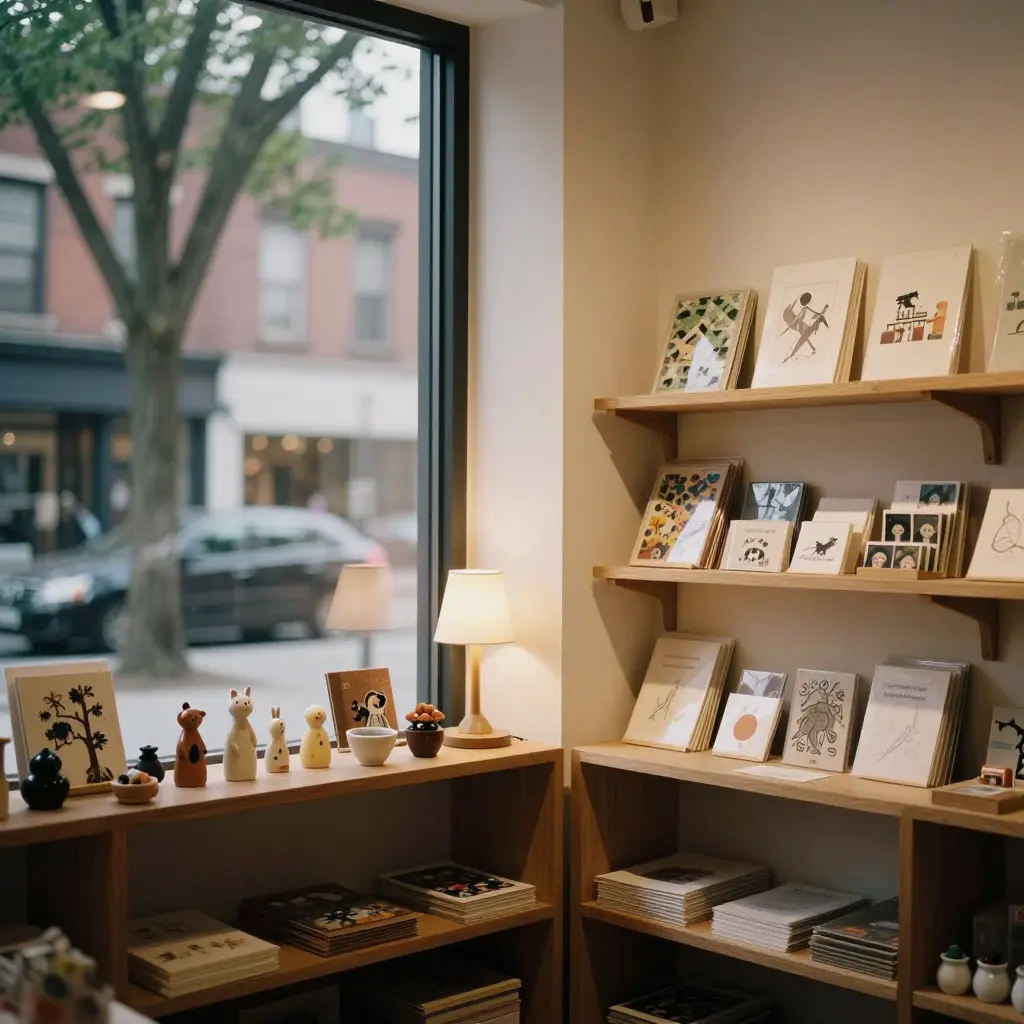
A corner of the shop: warm wood, small objects on the shelves, the street reflected in the window.
Art of Play is not a store that usually makes news. It sits at 69 Atlantic Avenue in Brooklyn Heights and sells playing cards, puzzles, games, books, and playful objects for the home, and it runs close-up magic shows in a small theater. The shelves lean on craft; the whole idea is that objects are meant to be picked up and wondered at. That premise is part of why the argument traveled.
The store’s first response was quieter than its second. It shared a customer review praising its staff’s kindness on Instagram Stories, then took it down. By then the story had already jumped from one post to dozens, as celebrity sites, tabloids, and aggregators each ran a version of it.
The Pretty Woman comparison is easy to make, and it is worth seeing exactly where it holds and where it doesn’t.
| Aspect | Pretty Woman (1990) | Art of Play (2026) |
|---|---|---|
| Protagonist | Vivian Ward, played by Julia Roberts | Kelly Clarkson, a Grammy-winning singer |
| The setting | A Rodeo Drive boutique | A design and curiosity shop in Brooklyn |
| Why the cold shoulder | Dressed wrong for the room | Assumed she couldn’t afford the goods |
| The response | Comes back the next day and calls out the clerks | Tells the story publicly on X |
| The ending | The clerks fuss over her; a Hollywood resolution | No reversal: a statement, a deleted review, a dispute |
In the film, Vivian returns the next day with bags from other stores and tells the clerks they made a “big mistake. Big. Huge!” Money is the punchline, and the apology lands right on cue. On Atlantic Avenue, the person with the money arrived as a Grammy winner and still says she got the once-over. There is no third act waiting to smooth it over, only a store statement, a deleted review, and a public back-and-forth.
No Pretty Woman Ending
That is the part of the story that keeps it alive. The words exchanged inside the store cannot be verified by anyone outside it, and the store’s intentions remain a matter of interpretation. What gave the anecdote legs is its shape: a famous person walks into a small, taste-driven shop, and a stranger decides in a glance what she can and cannot buy. Most people have felt a version of that glance, at a boutique, a car dealership, or a restaurant with no prices on the menu.
The film sells a clean catharsis. Someone is dismissed for how they look, spends money as an argument, is recognized, and receives an apology. Real life has run a flatter arc here:
- A single uncomfortable shopping trip.
- A post that turns a private moment public.
- A store that shares a customer review about staff kindness, deletes it, and then posts a statement saying the item is not for sale.
- A reply from Clarkson calling the owner a liar, and a comment section that moves on with the next news cycle.
No reveal, no reversal. Just an afternoon that felt bad and an argument that has not resolved.
Why the “judge first” reflex holds on in retail:
- Storefronts run on fast guesses. Staff get a few seconds to decide who is worth the greeting, so they lean on heuristics.
- Those heuristics are shaped by years of marketing, window displays, and who usually walks out with a bag. By the time a real person is standing there, the assumption is already in place.
- That is why it is not simple rudeness you can retrain in a week. To the person applying it, it feels like intuition.
There is also a detail worth noticing in Clarkson’s own words. Her sharpest line was “you just lost a huge sale,” which is still a money argument, the same logic that produced the snub in the first place. Even the comeback is a transaction: she wins by being worth more, not by being seen.
The Pretty Woman fantasy is that the right outfit and the right credit card make the room behave. The actual episode ended with less: an ordinary slight, no scene to resolve it, and a store that mostly asked to be left alone. The movie promised a last word. What the story produced was a deleted review and a statement.

An object on a table, lit and left alone, waiting for someone to decide what it’s worth.
How People Reacted
Once the post started circulating, the replies sorted into a few recognizable camps. A lot of people locked onto the feeling of walking into a shop and being sized up, that quiet sting of a salesperson deciding you are not worth their time before you have said a word. Others pushed back, asking whether a singer with a following of more than 8 million naming a small Brooklyn store is a fair fight. A third group treated it as a case study in how retail staff and customers both carry assumptions into a room. And a fourth simply reached for the Julia Roberts reference and had fun with it.
Clarkson’s original post drew both support and criticism, and the store said it was flooded with negative reviews from people who had never been there. The split below is an impression from reading the threads, not a poll.
Breaking Down the Reaction
- People who recognized the experience of being judged by appearance, and shared their own stories.
- People who thought calling out a small business by name was an uneven use of a huge platform.
- People who used it to talk about service-industry assumptions on both sides of the counter.
- People who just wanted to joke about Rodeo Drive.
One-line takeaway: Support and shared experience dominated the discussion, but a notable minority was more interested in whether the callout was fair, and in what the store’s response revealed, than in the shopping trip itself.
What the Story Says About Retail
-
Retail still reads people by appearance before it reads their wallet. A Brooklyn boutique and a 1990 movie sit decades apart, but the assumption that a shopper “can’t afford it” comes from the same script: the coat, the carriage, who looks like they belong. What lingers is not one clerk’s misjudgment so much as how quickly a room decides who is a customer and who is a guest.
-
A private slight turns public almost the moment it happens. A bad interaction used to end at the door. Now it becomes a post, a clip, and a headline within hours, and the store’s side arrives as a statement and a deleted review. The experience is not only shared, it is staged, and everyone gets a turn to audition for the role of the wronged party.
-
A brand built on “play” and “kindness” gets held to its own sign. When a store’s premise is delight and good vibes, any cold moment reads as a contradiction, and the reply matters more than the original offense. Answering with a customer review that praises the staff’s “kindness” can look less like accountability and more like quoting your own homework.
-
Buying something now doubles as proving something. The purchase was never only about the object; it is also about being seen as someone who could buy it. That is why being turned away stings past the money involved. It is not the merchandise that gets refused so much as the version of yourself you were trying on.
FAQ
What kind of store is Art of Play?
Art of Play is a design and curiosity shop at 69 Atlantic Avenue in Brooklyn Heights. It sells playing cards, puzzles, games, books, and playful home objects, and it hosts close-up magic shows in a small theater. It is a destination shop, not a typical big-box retailer.
What exactly did Kelly Clarkson say?
In her Oct. 10 post, Clarkson said she had driven to Brooklyn, was “literally … looked at as if I couldn’t afford it,” and was told the employee could find her something comparable. She called him an idiot and said the store “just lost a huge sale.” After the store’s statement, she said she had been told the singing bird cost $15,000 and called the owner “not only rude” but “also a liar.”
Why did she compare the experience to Julia Roberts in Pretty Woman?
She used the film reference to describe being judged on appearance rather than treated as a paying customer, echoing the scene where a Rodeo Drive clerk dismisses Julia Roberts’ character. It was Clarkson’s own shorthand for feeling looked down on, not a literal comparison of the two situations.
How did the store respond?
Art of Play first shared a customer review praising its staff’s kindness on Instagram Stories and later deleted it. On Oct. 11 it posted an Instagram statement saying the item Clarkson asked about, a singing and dancing bird automaton named Molly, is attached to the wall and is not for sale, and that it had been a surreal experience to draw such widespread anger after one celebrity mention. Clarkson disputed the account the same day.
Where This Leaves Things
Both things can be true at once: an automaton can genuinely be off the market, and a shopper can still walk out feeling measured by her coat. The store’s own statement came close to conceding the second point when it said the feeling would resonate with anyone who has been judged in a shop.
That is the part with a longer shelf life than the feud. Art of Play can say Molly was not for sale; Clarkson can say she saw a price tag. Neither claim settles how those minutes in the store felt, and that feeling is what actually traveled. Retail is a long series of small verdicts about who deserves attention. Most of them go unnoticed until someone with a microphone and a following says one out loud.
I write about culture, design, and the strange ways we shop at clasiswear.com.