Selma Blair was removed from a Delta Air Lines flight from Los Angeles to New York’s JFK airport on the night of October 11 and arrested. Prosecutors accuse her of attacking flight attendants on board; two were injured and one was taken to a hospital. The alleged assaults did not end there. After the plane landed, according to the charges, Blair kicked a Port Authority police officer in the head while being transported in an ambulance and assaulted a nurse once she arrived at the hospital.
She pleaded not guilty Monday night in Queens to two counts of second-degree assault. A judge set bail at $20,000 cash or $60,000 bond, and Blair was released. Her lawyer, Shawn Barnes, told the court that she had missed doses of medication she takes for multiple sclerosis and had fallen and hit her head, leaving her in what he described as a state of “severe confusion and disorientation.”
One of those accounts is a set of criminal charges. The other is her defense’s explanation for them. How the two fit together is now a question for a court, not for the rest of us.
Who Is Selma Blair?
Blair, 54, is an American actress who became a fixture of late-’90s and early-2000s Hollywood. She played Cecile Caldwell in Cruel Intentions (1999) and Vivian Kensington, Elle Woods’s rival who becomes a friend, in Legally Blonde (2001), and appeared in the Hellboy films, among many other credits.
In October 2018 she disclosed that she had been diagnosed with multiple sclerosis that August. Since then she has talked about the disease in interviews, on social media and in her 2022 memoir Mean Baby, including the use of mobility aids and how symptoms affect her working life.
That disclosure shapes how the arrest is being read. When someone who has described living with a chronic illness is accused of violence, readers go looking for a medical explanation, and the search can outrun what is actually known. The court record and the medical claim are separate things; so far only the first is being tested in front of a judge.
| Key Point | Confirmed Content | Source |
|---|---|---|
| Flight | Delta Air Lines Flight 938, Los Angeles (LAX) to New York (JFK), Oct. 11, 2026 | BBC, CBS News |
| Removal | Police removed Blair from the plane after it landed; she was arrested and taken to a hospital | BBC, NPR |
| Charges | Two state counts of second-degree assault (officer and nurse) and a federal summons for assault aboard the aircraft; two flight attendants were injured | BBC, AP, CBS News |
| Plea | Not guilty, entered at arraignment in Queens on Oct. 12 | BBC, Page Six, CBS News |
| Bail | $20,000 cash or $60,000 bond; released | BBC, Page Six, ABC News |
| Defense account | Missed MS medication and a head injury leading to “severe confusion and disorientation,” per lawyer Shawn Barnes; representatives cite a “medical emergency” | Page Six, BBC |
| Hours before | In an Instagram exchange, she wrote, “I am not great” | Page Six, Mercury News |
Two Narratives, Not Two Truths
The legal record and the defense’s explanation are not rival verdicts. They answer different questions: what Blair is accused of doing, and what may have been happening to her at the time.
The charges come from two jurisdictions. Federal prosecutors issued a summons for assault within the special maritime and territorial jurisdiction of the United States, which covers conduct aboard an aircraft. The second-degree assault counts were filed in state court in Queens and concern the police officer and the nurse. All of it remains allegations; no finding of guilt has been entered.
Barnes’s account is a claim by her defense, not a conclusion. He told the court that Blair had fallen and hit her head and had worked long hours on set in the days before the trip; those factors, he said, combined with the altitude to produce “severe confusion and disorientation.” Her representatives gave the BBC a similar statement, saying she had “experienced a medical emergency that led to the alleged conduct.”
Both can be held at once without taking a side. The charges describe conduct. The defense describes a condition. A court will decide which carries more weight, and on what evidence, rather than on which version reads more sympathetically.

Where Feeling Unwell Ends and Losing Control Begins
There is no clean line between being unwell and losing control, which is part of why the case is difficult. Courts still have to draw one, using a standard that asks whether a defendant could understand their conduct or control it.
On the flight, two flight attendants were hurt and one went to a hospital. Air traffic control audio obtained by CBS News has the pilot requesting medical help and describing a “bloody nose as well as some bite marks.” Blair was restrained by the crew before the plane landed at JFK around 11 p.m.
The factors her defense cites — missed medication, a head injury, long days on set, cabin pressure — do not excuse harm to anyone. They are offered as an explanation, which is a different thing from a justification. Whether that explanation holds will depend on medical evidence, not on how sympathetic it sounds in a courtroom.
The people who responded were not asked to weigh any of it. Flight crews and airport police follow safety procedures; their task is to stop a disturbance, not to diagnose the person causing it. Blair was taken to a hospital, then to Queens Central Booking, then to court.
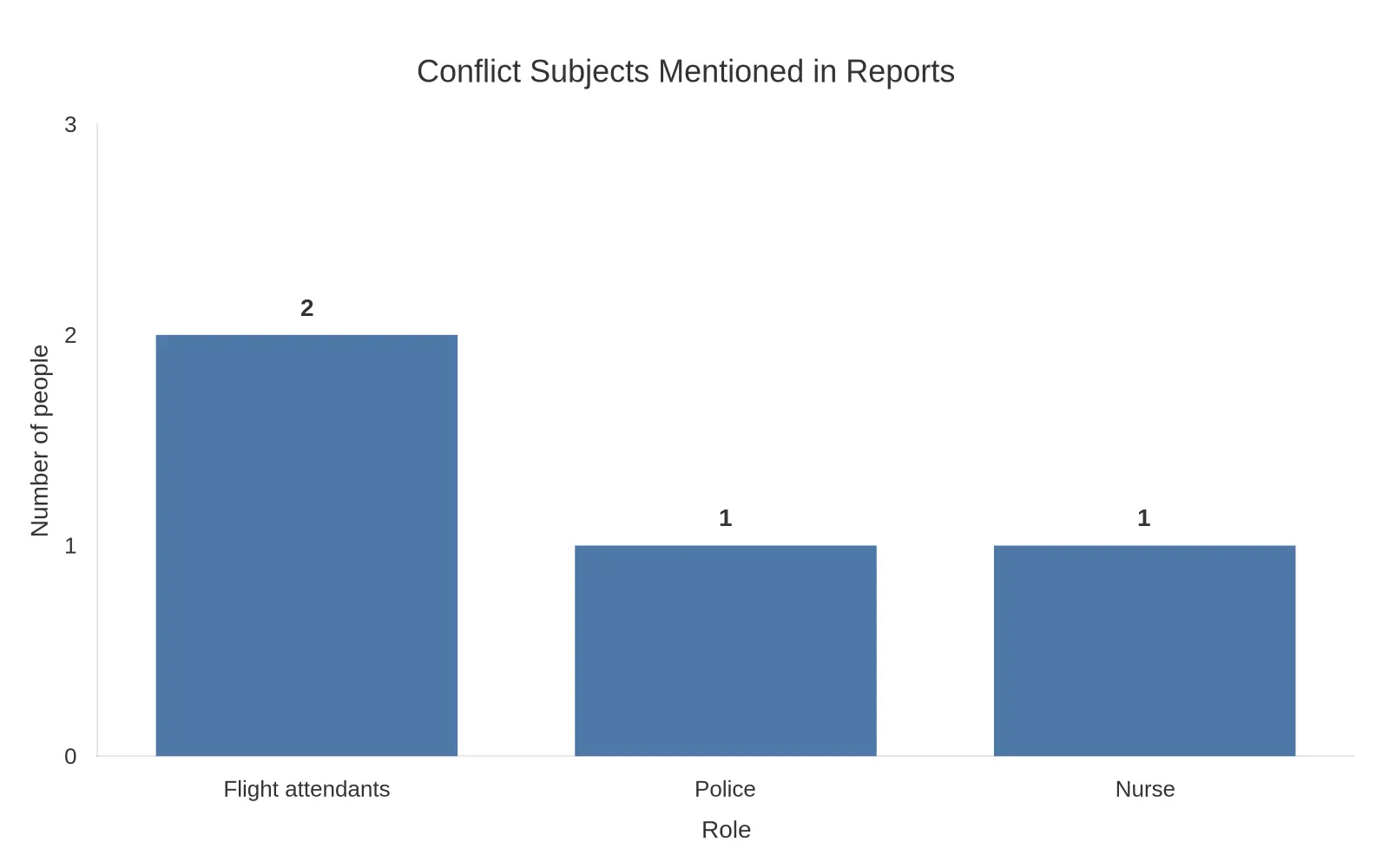
Charging documents describe four people as the subjects of the alleged assaults: two flight attendants, one Port Authority police officer and one nurse. The sequence matters. The incidents did not stay in the aisle. They continued in the ambulance and at the hospital, which is why the case now involves charges in two courts.
Where the Case Stands, Procedurally
Blair was arraigned Monday night in Queens Criminal Court before Judge Indira Khan and pleaded not guilty to two counts of second-degree assault. The judge set bail at $20,000 cash or $60,000 bond, granted an order of protection for the nurse and adjourned the case to January 19, 2027. Reporting on the arraignment described a potential sentence of two to seven years if Blair is convicted.
That figure is a maximum, not a forecast. An arrest, a bail amount and an arraignment are procedural steps; none is a finding of wrongdoing, and no conviction has been entered. The federal charge, which concerns the allegations aboard the aircraft, does not yet have a court date.

A boundary drawn in light and shadow: crisp on one side, dissolving on the other.
Title: Selma Blair’s Flight and the Thin Line Between Feeling Unwell and Losing Control
Meta description: A Delta flight, an arrest at JFK and a defense that says a medical emergency drove the alleged conduct. What the record shows, and what it does not.
Frequently Asked Questions
Who is Selma Blair?
Blair is an American actress, 54, known for Cruel Intentions (1999), Legally Blonde (2001) and the Hellboy films. In October 2018 she said she had been diagnosed with multiple sclerosis, and she has since written and spoken about living with the condition, including in her 2022 memoir Mean Baby.
Why was she taken into custody?
Port Authority police responded to a call about a “physically abusive passenger” after Delta Flight 938 landed at JFK on the night of October 11, the BBC reported. Two flight attendants were hurt and one was taken to a hospital. Blair was arrested and taken to a hospital before being booked. Delta said it has “zero tolerance for unruly or unlawful behavior.”
What is she accused of?
She faces two counts of second-degree assault in Queens: one involving a Port Authority police officer she is accused of kicking in the head in an ambulance, and one involving a nurse at the hospital. Federal prosecutors also issued a summons for assault aboard the aircraft. She has pleaded not guilty, and no conviction has been entered.
Where does the “missed medication” explanation come from?
From her defense lawyer, Shawn Barnes, who told the court that Blair had missed doses of her multiple sclerosis medication and had hit her head, producing “severe confusion and disorientation.” Page Six reported his remarks. It is an account from her legal team, not a court finding or a medical determination.
Could she face prison time?
Reporting on the arraignment put the maximum at seven years if she is convicted, with Page Six describing a range of two to seven years. Bail was set at $20,000 cash or $60,000 bond, and she was released. Any sentence would be up to the court; a stated maximum is a ceiling, not a prediction.
The short version: an incident on a plane, an arrest and a not-guilty plea. The rest is still being argued.
Blair’s fame is why the flight made national news. The details are why it is still being discussed. What the record shows so far is mostly procedure: a crew that restrained a passenger, airport police at the gate, an ambulance to a hospital, an arraignment in Queens. What it does not show is why it happened. Her defense says a medical emergency explains it, and that is now a question for evidence. Until it is answered, the commentary will keep running ahead of the courtroom.