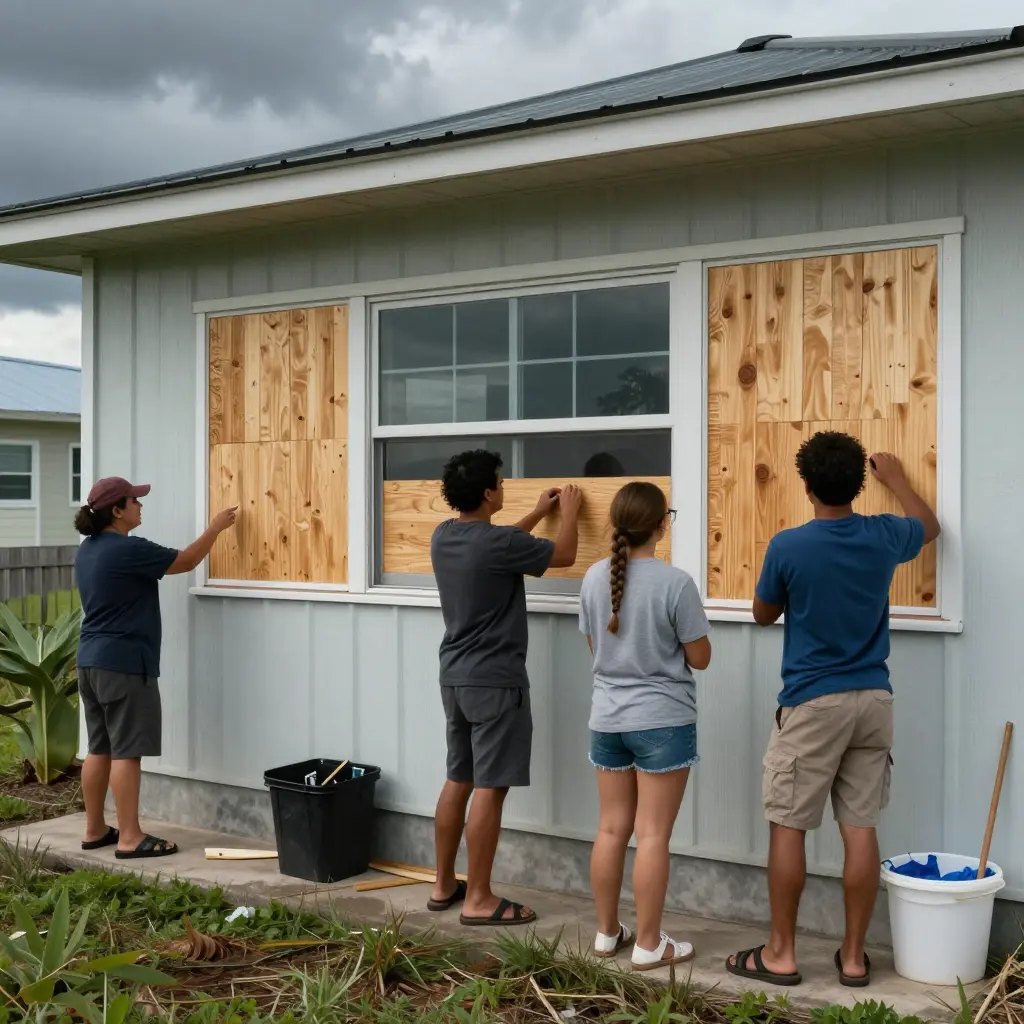
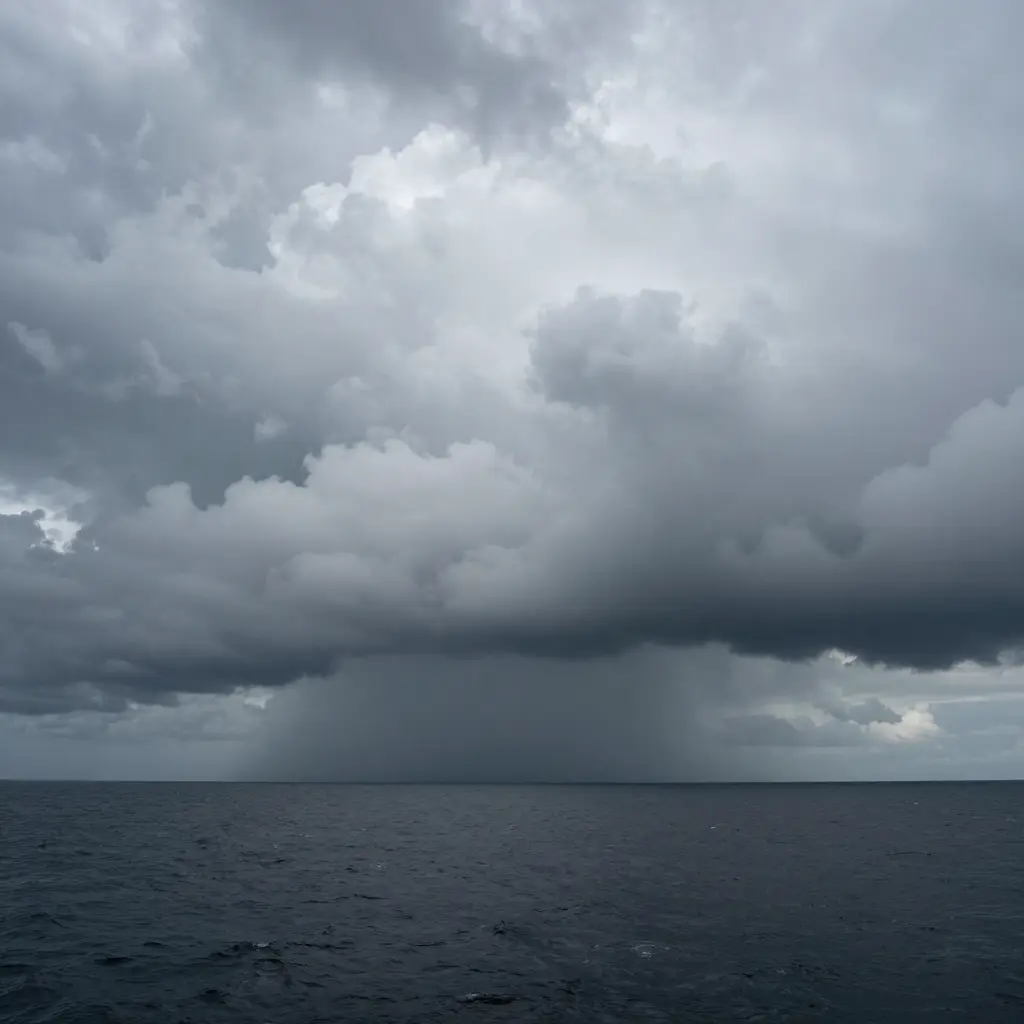
On the same October morning, one part of the country scrapes ice off a windshield, another sits under an extreme heat warning, and a third watches water rise in the streets. The clock is the same. The day is not.
Type “weather today,” into a search bar and you are usually asking something small and local: the temperature outside your own door, whether rain is on the way, how hard the wind will blow, what the alerts say for your corner of the map. It is about the most ordinary search there is. And still, the “today” you mean and the “today” I mean can be entirely different days — one carrying sunscreen, one carrying an umbrella.
Below is what the National Weather Service had posted on one Wednesday in October. Seven places, seven different days.
| Region | Weather Today | Key Factors | Status Type |
|---|---|---|---|
| Connecticut | Frost early, then sun and a mild afternoon | Frost Advisory at dawn; cold start easing to sunny skies with highs in the mid-60s | Advisory (morning) |
| California Bay Area | Warm to hot inland, cool and gray at the water | Shallow marine layer and fog lingering by the coast and bay; Heat Advisory until 10 p.m. Thursday away from the coast | Advisory |
| Southern California / Los Angeles | A long, dangerous heat wave | Extreme Heat Warning through Thursday evening; highs near 98 F; elevated fire danger | Warning |
| Florida / Jacksonville | Heavy rain and flooding | Rain likely through the weekend, with chances climbing above 80% Friday and Saturday; flood warning and watch in effect | Warning |
| Central North Carolina | Sunny and warm, cold after dark | Clear skies; overnight lows in the low 50s; sunshine returns | None |
| Rockford, Illinois | Warm, sunny, and breezy | Breezy winds; warming into the weekend; a slight chance of showers Friday, then a better chance early next week | None |
| Kauai, Hawaii | Light winds turning southerly | Sea breezes; isolated showers by day, occasional showers and thunderstorms overnight; Flood Watch from Wednesday evening | Watch |
Frost on one lawn, fire weather on another, floodwater a few time zones away — all filed under the same date.
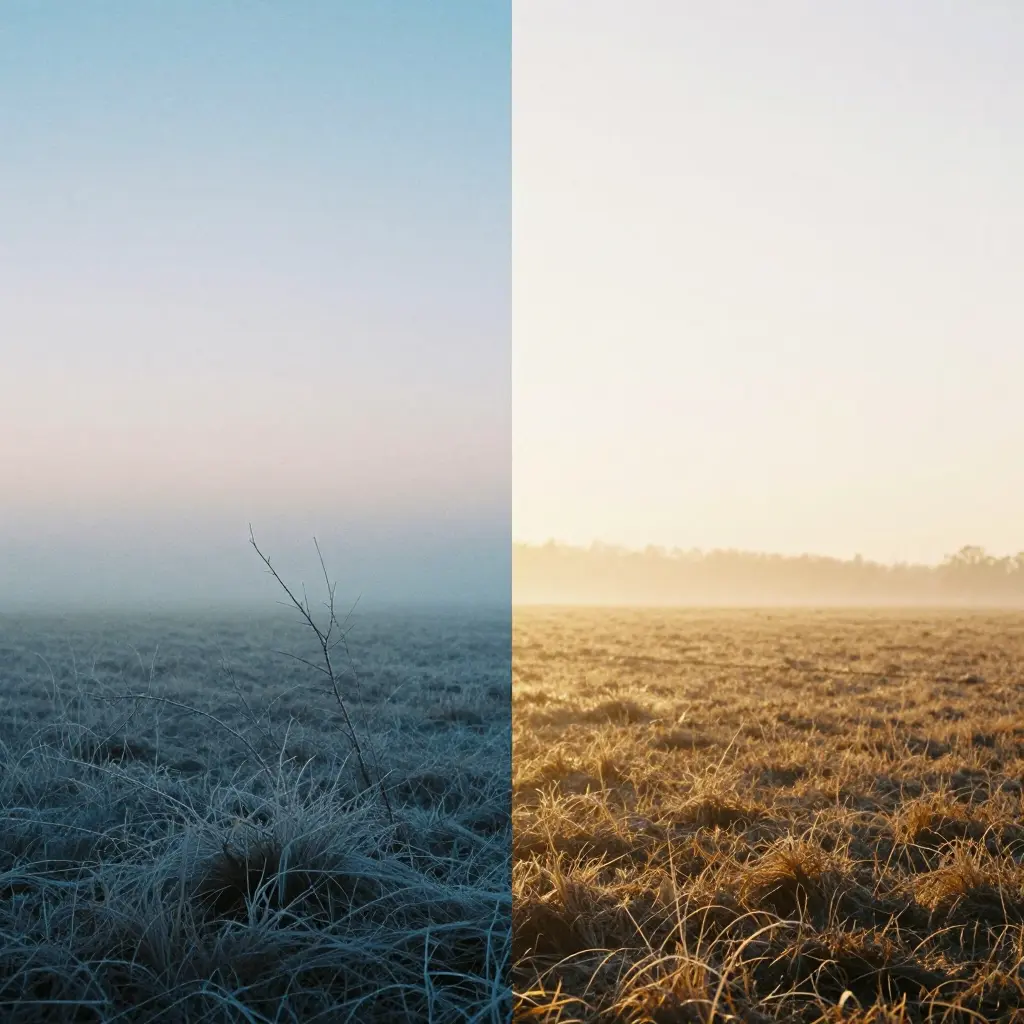
Same hour, opposite days: a frosted field on one side, a warm afternoon on the other.
Today Is a Relative Word
Most of us say “today” as if it covers everyone at once. Across one country, it doesn’t. A frost advisory and a heat advisory can both be filed under “today,” and neither one is a mistake.
Two things split the day: latitude and longitude. Latitude decides how much sun a place gets, and whether cold air can settle or heat can pool. Longitude decides what time it is when that sun arrives. Put them together and “today” stops being a moment and becomes a band, uneven from one end to the other.
So when you tell me the weather today, you are describing your patch of sky at your hour. Mine may be a different day altogether, calendar notwithstanding. The forecast isn’t wrong. It’s local — and so, in the end, is today.
Here is what that same day looked like, depending on whose window you looked out of:
- Connecticut – you scrape frost off the windshield before sunrise, then trade the coat for sunglasses by noon as the afternoon reaches the mid-60s.
- The Bay Area – hot and dry the moment you head inland, but cool and gray at the water’s edge, where the marine layer sits and the heat advisory runs past dinner.
- Los Angeles and Southern California – heat that lasts into the evening, air dry enough to crackle, and hills ready to burn.
- Rockford, Illinois – warm sun, a steady breeze, the kind of easy day that makes it feel like summer never left.
- South Florida – thick, sticky air and afternoon storms, with a 50% to 70% chance of a downpour that soaks you in ten minutes.
- Central North Carolina – a cold, clear night with lows in the low 50s, then a slow warm-up as the sun climbs.
- Kauai, Hawaii – gentle winds swinging around from the south, sea breezes moving in, isolated showers by day and heavier rain overnight.
- Jacksonville, Florida – rain that won’t quit, streets turning into shallow rivers, umbrellas more decorative than useful.
One day, one country, and still no shared weather.
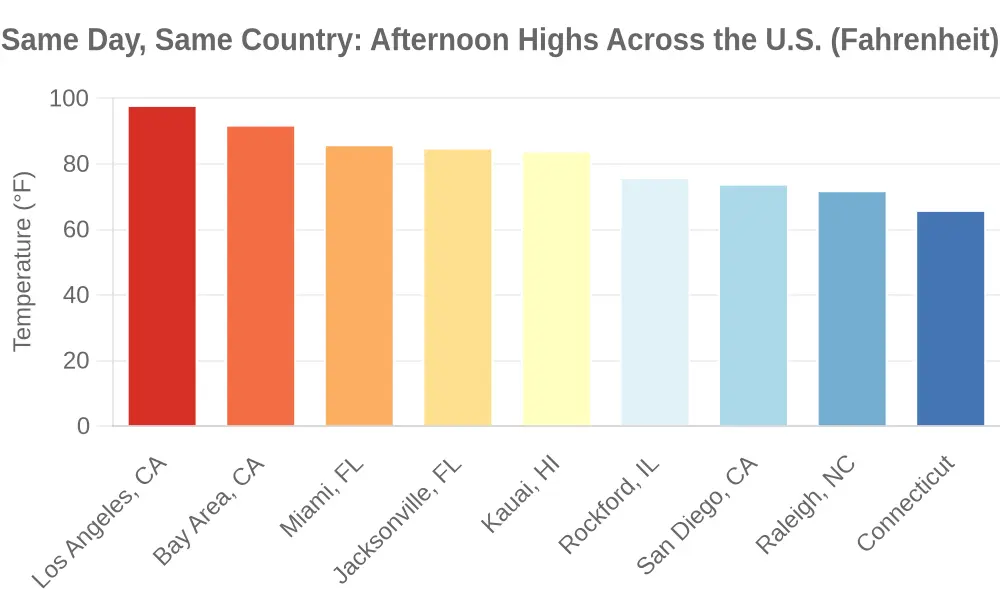
On the same Wednesday, Los Angeles was forecast to reach 98°F while Connecticut woke to a frost advisory and warmed to the mid-60s – a spread of more than 30 degrees inside one national forecast.
Why We Check the Weather Somewhere Else
Most weather searches start close to home. Will it rain on the walk to work, does the afternoon need a jacket, is it going to freeze tonight. Small questions, answered in seconds.
But look at what people actually search and a second habit shows up. They type in cities they aren’t standing in: a place where someone they love is waking up, a coastline they’ll reach in a few days, a town they left years ago and still check on.
The forecast itself is ordinary information — temperature, wind, chance of rain. What it does is let you stand, for a moment, where someone else is standing. If it’s raining there, you picture them reaching for an umbrella. If the heat is punishing, you hope they’re drinking water. You can’t be there, but you can know the sky over their head, and that closes some of the distance.
Travel works the same way in reverse. Checking the weather before a trip is part planning, part rehearsal — a way of starting the journey early.
For everyone else the habit carries a similar weight. Weather is one of the few things everyone shares and no one controls, and asking about it somewhere else is often just a way of asking how someone is. The reason so many of us look up a forecast for a place we don’t live has little to do with rain or temperature. We’re checking on people.

Different windows, different weather, the same habit of looking up for someone else.
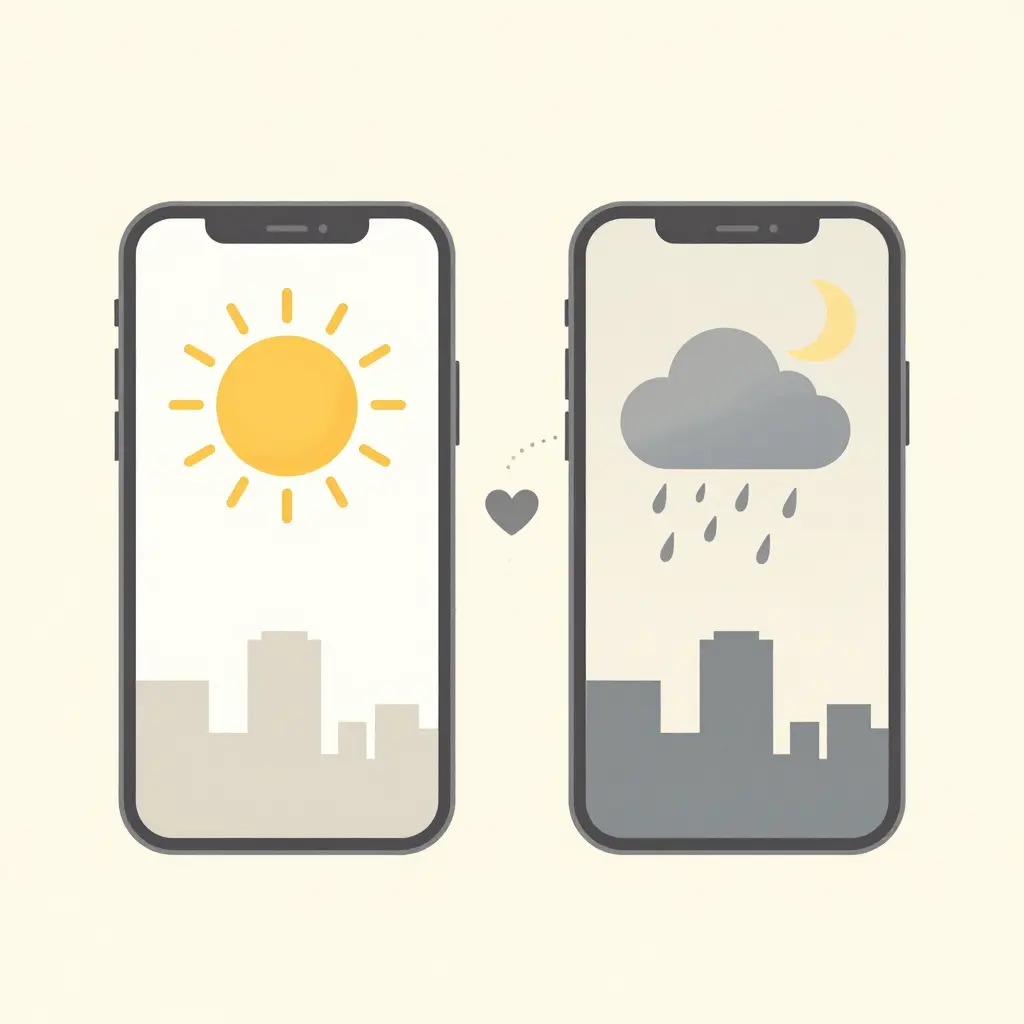
The weather today where you are and where I am is rarely the same day. One place wakes to frost, another to a heat advisory, another to rain that won’t quit. If you’re far from someone, or moving between a few places yourself, a quick daily check becomes a small act of care. A few habits make it easier.
A Few Small Habits That Go a Long Way
-
Compare two forecasts, not one. Open their city next to yours before your day starts. Seeing both at once takes ten seconds and tells you more than a single glance.
-
Set alerts for their weather, not just yours. A daily notification for where they are often lands better than a general “how’s it going.”
-
Watch advisories, not only the temperature. Frost, heat, wind, and flood notices matter more than the number on the screen.
-
Match the message to the gap. A small difference only needs a light mention. A big swing deserves a real heads-up, so the note actually fits the moment.
-
Check the clock before you reach out. Their morning may be your late night. A quick look at the local time keeps a caring note from arriving at a strange hour.
-
Flag wind and rain, not just heat. Wind chill and wet roads change a day fast, and they’re easy to overlook when you’re only reading a high and a low.
-
Note sunrise and sunset when someone’s day runs long. A reminder that it gets dark earlier now can help them plan a walk or a drive.
-
Pack for the swing, not the average. If you’re the one traveling, look at the spread between the warm afternoon and the cold morning, then dress for both.
-
Send a screenshot when something looks off. A picture of an incoming warning says it plainly, without your having to explain why you’re worried.
-
Keep it light and steady. A short daily note about the sky costs almost nothing and builds a small ritual. That’s usually the point.
None of it is complicated. It’s the same habit you already have, aimed at someone else — and done often enough, it becomes one of the things that keeps you close.
Weather Today: The Questions We All Ask
Short answers to the questions that come up when you’re checking the sky for yourself and for someone else.
Why can “the weather today” be so different in two places that share the same date?
Because weather is local, and the atmosphere doesn’t move as one piece. Air masses, coastlines, mountains, and pressure systems all shape conditions block by block. On one day this October, Connecticut woke to a frost advisory while Southern California sat under an extreme heat warning with rising fire risk, and parts of Florida worked through heavy rain and flooding. None of that contradicts the rest. It’s just different systems doing their own thing at the same hour.
What’s the fastest way to check several locations at once?
- Save each place as a city in your phone’s weather app, so they show up as a swipeable list.
- Use one site or app that lets you pin multiple locations side by side.
- Look at four things first: today’s high and low, chance of rain, wind, and any active alerts. Skip the rest unless something looks off.
What do advisories, watches, and warnings actually mean?
| Term | What it signals | What to do |
|---|---|---|
| Advisory | Something inconvenient or mildly risky is expected (frost, heat, wind) | Be aware, tweak your plans |
| Watch | Conditions could produce hazardous weather | Get ready, keep checking updates |
| Warning | Hazardous weather is happening or imminent (flash flood, severe storm) | Act now, follow local guidance |
An advisory usually isn’t a “drop everything” moment. A warning usually is. When in doubt, trust the newest alert over the one you saw at breakfast.
How do time zones change what counts as “today”?
“Today” is tied to a clock, not the planet. When you’re winding down at night, it may already be tomorrow for someone a few zones ahead, so their “today’s forecast” is really your tomorrow. That’s why the same moment can sit on two different dates depending on where you stand.
| Zone | Offset from UTC | Local time at 8:00 PM UTC |
|---|---|---|
| Hawaii | -10 | 10:00 AM |
| Alaska | -9 | 11:00 AM |
| Pacific | -8 | 12:00 PM |
| Mountain | -7 | 1:00 PM |
| Central | -6 | 2:00 PM |
| Eastern | -5 | 3:00 PM |
Same instant, six clocks. All six are still on the same calendar date; move far enough east and it’s already tomorrow.
Why does today’s forecast keep shifting as the hours pass?
Forecasts are estimates, not verdicts. As new readings come in, models rerun and the picture sharpens. A morning “mostly sunny” can turn into an afternoon “storms likely” if the ingredients change. Treat the forecast as a living guess you recheck, not a promise you memorize.
So how should I use all this?
Check the spot you’re standing in first, then glance at the place that matters to you, and let the two coexist. It’s a small ritual, but a real one — especially when the person you care about is under a different sky.
Someone, somewhere, opens a forecast for a city they don’t live in. A place they left, or a place someone they love still wakes up to. The screen shows ordinary things — a high, a low, a chance of rain — but underneath sits a smaller question: how is your day treating you?
That’s what weather is when you use it this way. Not data to act on, but a way of staying in touch. Your morning and mine don’t line up; the sun warming you is already setting on me, or hasn’t risen yet.
So keep checking. It won’t change the weather, but noticing is its own way of staying close.