I never read the ingredients list on a drink bottle. I’d grab one, check the price, maybe glance at the calories, and keep walking. The block of tiny gray text on the back might as well have been written in another language.
Then the Gatorade recall showed up in my feed, and I finally turned a bottle around to read the line I’d been ignoring for years. The whole thing came down to Yellow No. 5 and Yellow No. 6 – dyes that weren’t declared on some of the recalled bottles. Those twenty-odd words stopped looking like decoration.
This isn’t a case for giving up sports drinks, and I’d rather not turn a recall into a lecture. What follows is what happened, which flavors and states are involved, what “undeclared dye” actually means on a label, and how to check a bottle in your own fridge.
PepsiCo, which owns Gatorade, recalled 122,021 cases of 28-ounce bottles sold in 37 states. According to the FDA’s enforcement report, the drinks contained undeclared Yellow No. 6 and/or Yellow No. 5, the artificial dyes that give the drink its color.
The problem is disclosure, not contamination. What was inside the bottle didn’t match what the label promised. The FDA classified the recall as Class II on Oct. 2 – a category for products that may cause temporary or medically reversible harm, with serious consequences unlikely.
It’s the kind of recall that’s easy to scroll past, until you notice the affected bottles turned up in stores in New York, New Jersey and 35 other states.
| Item | Content |
|---|---|
| Recalling entity | PepsiCo (Gatorade) |
| Reason | Undeclared Yellow No. 6 and/or Yellow No. 5 |
| Affected products | 28 oz. Gatorade Lemon Lime, Lemon Lime Zero, Orange and Orange Zero |
| States affected | 37 states |
| Cases recalled | 122,021 cases |
| Regulator | FDA |
| Key dates | Recall initiated Sept. 25, 2026; classified Class II Oct. 2, 2026 |
Why That One Word, “Undeclared,” Deserves a Second Look
“Undeclared” and “harmful” are not the same claim, and treating them as one makes the recall harder to understand.
This recall says a product contained something the label didn’t list. It doesn’t, by itself, say the ingredient is dangerous. Disclosure and toxicity can overlap, but they aren’t the same thing. Labeling rules exist so people can decide for themselves, and a rule you can’t rely on isn’t doing its job.
The gap between what was promised and what was inside is the actual subject here. For most shoppers that’s an annoyance. For some, it isn’t.
If you scan labels for dyes, or avoid certain colorants for allergy, sensitivity, dietary or religious reasons, an unlisted ingredient takes away your ability to choose. You can’t avoid what you can’t see, and Yellow 5 and Yellow 6 sit on a lot of avoid lists.
None of that makes every bottle risky. It makes accuracy the point: an ingredient list is only useful if it’s complete, and when it isn’t, reading the label yourself is the reasonable fallback.
If there’s Gatorade in your fridge, here’s what to do about it.
-
Grab the bottle and check the label – note the flavor, bottle size, and any UPC or lot code near the top or bottom.
-
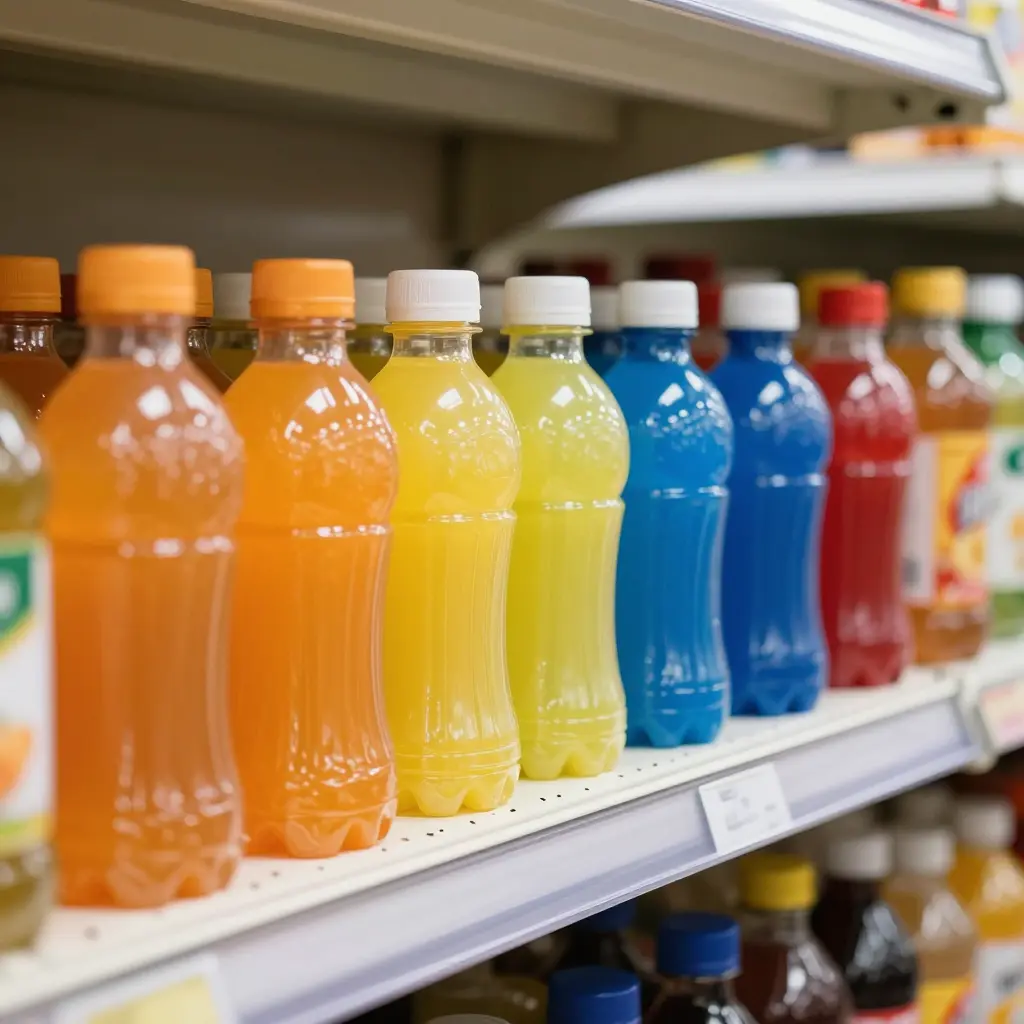
Compare what you have with the recall details – it covers 28-ounce Lemon Lime, Lemon Lime Zero, Orange and Orange Zero bottles, so check flavor, size and lot code before assuming yours is included.
-
If your bottle matches, stop drinking it – set it aside and keep it out of reach of kids who might grab it on their own.
-
Don’t pour it out yet – keep the bottle or the receipt, since you may need it as proof for a return or refund.
-
Ask about a refund – check with the store where you bought it, or with PepsiCo, about a return or replacement.
-
Verify before you trust a forwarded screenshot – check the FDA’s recall notice or Gatorade’s own site for the actual list.
How Big Is This Recall, Really?
It’s easy to skim past a number like 122,021 cases. Here’s the footprint.
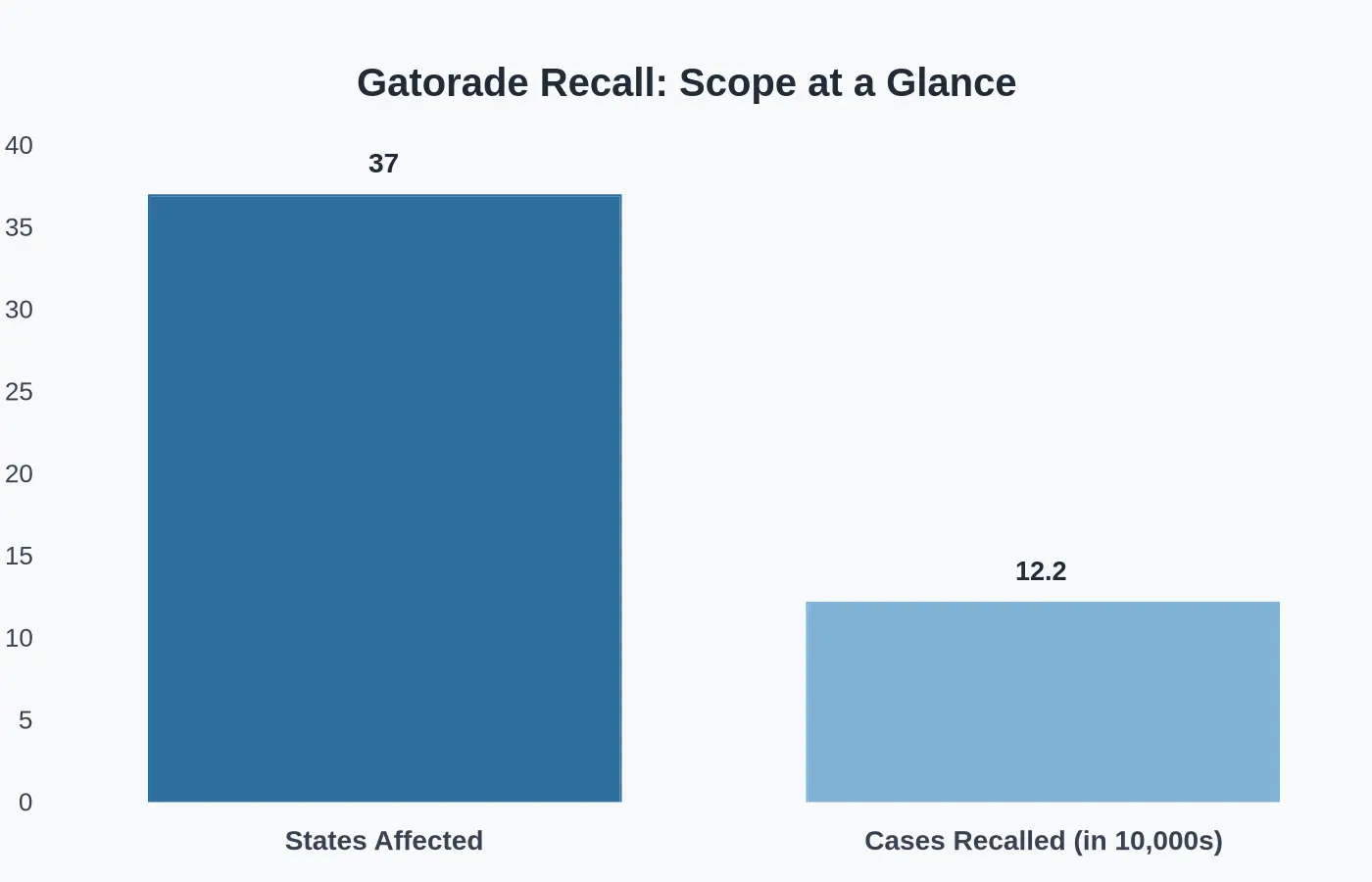
The chart sets two confirmed figures side by side: 37 states where the affected product was sold, and the volume pulled, shown in units of 10,000 cases – about 12.2, or roughly 122,000 cases.
One figure is geography, the other is volume. Together they show this wasn’t a single-batch problem in one region; it reached shelves across most of the country.
Chart note: Figures come from the FDA’s enforcement report for the PepsiCo recall – 37 states and 122,021 cases, rounded here to units of 10,000. No estimates have been added.
The Line I Never Read
I trusted Gatorade because I grew up with it – the bottle handed to me after practice, the one on every sideline. I assumed a name that big didn’t need my scrutiny.
What embarrassed me wasn’t loyalty to a brand. It was letting the logo stand in for knowing anything.
So I changed one habit. Before a bottle goes in my cart, I flip it over and read the ingredient line. Four seconds. Sometimes I put it back, sometimes I don’t; either way I know what I’m buying.
I’m not telling anyone to stop drinking sports drinks. The label was there the whole time. The recall is what made me finally look at it.
Here’s the routine I run now, in about half a minute.
-
Read the whole list, not just the front. Ingredients are ordered by weight, so whatever comes first is the largest part of the drink. If water leads and sugar or syrup is next, you know most of the story before you reach the additives.
-
Scan for colors by name. “Natural flavors” can hide a lot, but dyes usually show up as plain words: Yellow 5, Yellow 6, Red 40, Blue 1, or the letters “FD&C.”
-
Learn a few preservatives. Sodium benzoate, potassium sorbate, citric acid, ascorbic acid – none automatically alarming, but worth recognizing on sight.
-
Check four numbers on the Nutrition Facts panel. Serving size, added sugars, sodium and caffeine. They tell you most of what you need to know about whether a drink fits your day.
-
Watch the serving-size math. Plenty of bottles hold two or three servings, so the sugar figure you see isn’t the sugar in the whole bottle. Multiply before you decide.
-
Find the date and the lot code. The “best by” date tells you about freshness; the lot or batch code is the string you’d match against a recall list, and it’s your proof if the bottle gets pulled.
-
Check that the label matches the bottle in your hand. Same brand, different flavor, different dye. Make sure the flavor and size printed on the label match what you actually grabbed.
Gatorade Recall FAQ: The Questions I Actually Googled
These are the questions that kept coming up as I read through the coverage.
1. Why was Gatorade recalled in the first place?
PepsiCo recalled 122,021 cases of 28-ounce bottles after the FDA found undeclared Yellow No. 6 and/or Yellow No. 5. The issue isn’t contamination; the label didn’t match what was inside the bottle.
2. Which states are affected?
The recall covers 37 states, including New York, New Jersey, California, Texas and Florida. USA Today and Forbes have both published the full state lists.
3. I already have a bottle. Can I still drink it?
If your bottle isn’t one of the recalled lots, there’s no reason to dump it. If it is, set it aside and ask the store where you bought it, or PepsiCo, about a return or refund.
4. Does an undeclared dye mean the drink is dangerous?
Not automatically. An undeclared ingredient is a labeling problem first; it matters most for people with dye sensitivities or allergies. The FDA classed the recall as Class II, meaning the chance of serious harm is remote, though temporary or reversible effects are possible.
5. How do I know if my product is one of the recalled ones?
Check the flavor, lot code and “best by” date against the FDA’s recall notice, or the list from the store or brand. If the code matches, don’t drink it.
6. How can I avoid surprises like this next time?
You can’t predict a recall; they happen to careful brands too. You can skim the ingredient list before you buy and sign up for recall alerts from the FDA so the news reaches you directly.
I still grab a sports drink after a long run. I just flip the bottle over first. Not because of this recall or this brand, but because the habit stuck: I read the ingredient line the way I check the date on milk. Brands change formulas, suppliers change batches, and the news cycle moves on. Turning the package around takes ten seconds and doesn’t depend on remembering which company was in trouble last month. If you take one thing from all this, make it that. You don’t have to memorize anything. Just look.