Ka’imi Fairbairn’s 49-yard field goal went through as the clock hit zero. Houston 34, Jacksonville 31, at Wembley.
C.J. Stroud had done most of the work before that: 24 of 34 for 312 yards, three touchdowns and one interception. The interception was his first of the season, and it came in the end zone with Houston up three. Jacksonville turned it into Cam Little’s 60-yard field goal that tied the game at 31 with 1:55 left. Stroud then moved the Texans far enough for Fairbairn.
That is what the standings will record. What I keep returning to is the ground it happened on.
Early rain had left the Wembley grass slick. In the first quarter, umpire Larry Smith slipped and hurt his knee; he left on a cart. Houston’s Nico Collins changed into longer spikes during the first half. Dalton Schultz caught a pass in the red zone, slipped short of the first-down marker, and Houston kicked a 25-yard field goal for a 10-7 lead.
I am not going to claim those moments decided the game. Fairbairn still had to make a 49-yarder with no time on the clock. But the surface was part of the afternoon in a way the box score cannot show.
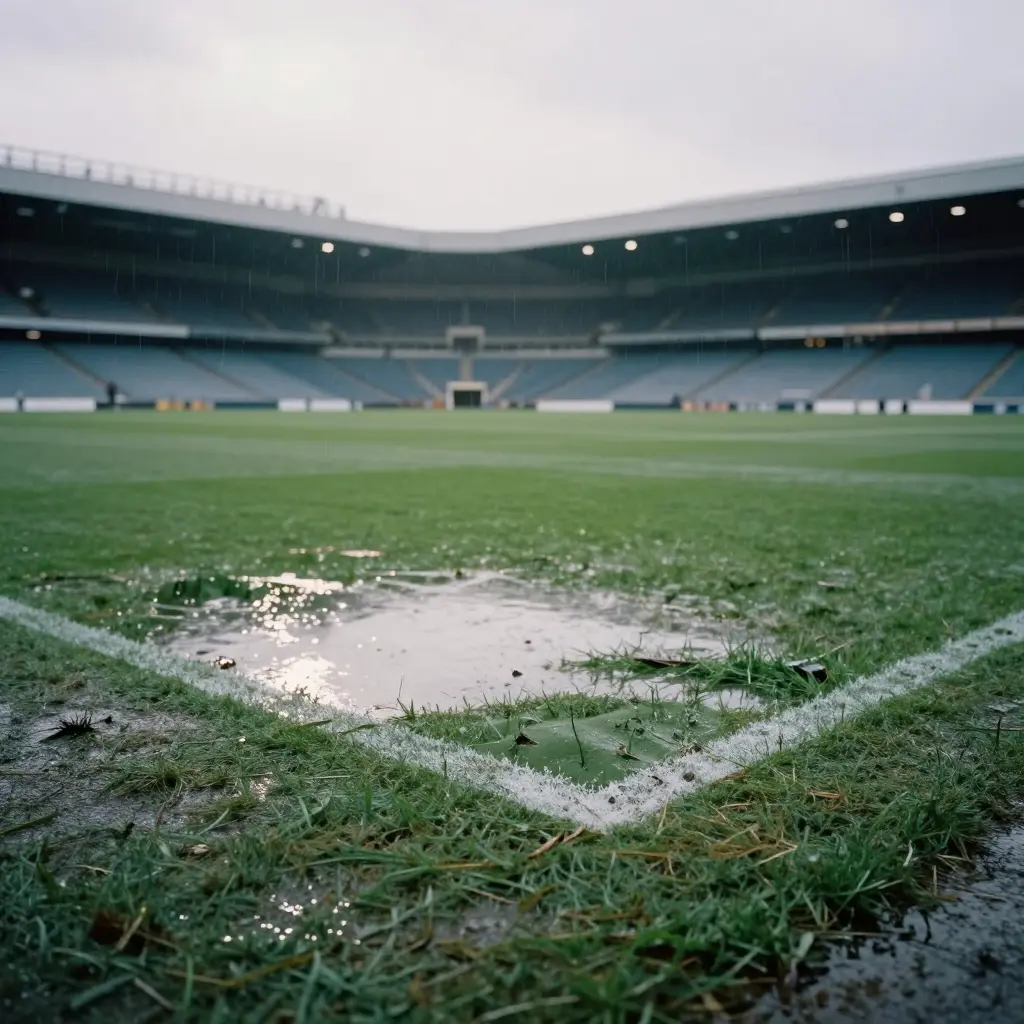
The Wembley pitch before kickoff.
What the pitch is
Wembley does not grow its pitch in place. Since 2023, the stadium has used a lay-and-play hybrid carpet: grass reinforced with synthetic fibre, grown off site for about 14 weeks, then cut into more than 720 rolls, trucked to London and laid in roughly 60 hours.
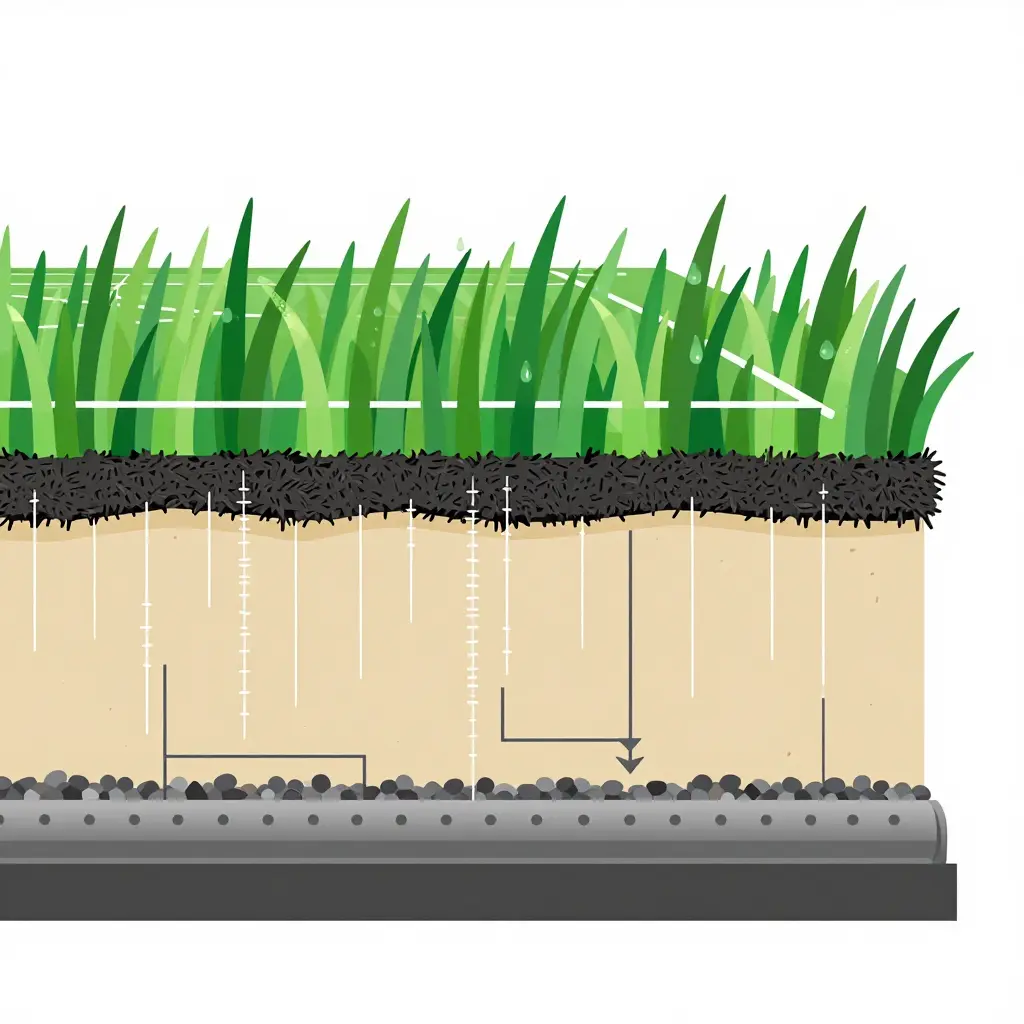
Hybrid turf in cross-section.
That is not a scandal, and it is not unique to Wembley. It is how a modern stadium gets grass back between concerts and football. But turf laid in rolls is still turf in the rain, and Wembley’s roof covers the seats, not the field.
The gaps matter. No moisture reading has been published, no grounds crew has explained how the pitch was prepared for this game, and there is no public list of what cleats the players wore. What we have is what people did: an official hurt his knee, a receiver changed shoes, a tight end lost his footing at the marker.
| Item | Status |
|---|---|
| Houston 34, Jacksonville 31; Fairbairn’s 49-yard field goal at 0:00 | AP, ESPN |
| Stroud: 24 of 34, 312 yards, 3 TD, 1 INT | AP box score |
| Larry Smith slipped and hurt his knee in the first quarter; left on a cart | AP |
| Nico Collins switched to longer spikes; Dalton Schultz slipped short of a first down | AP |
| Reed Blankenship left in the first half; listed with a concussion | AP; ESPN injury report |
| Wembley’s pitch is lay-and-play hybrid turf grown off site | Wembley Stadium |
| Moisture readings, a full cleat chart, the cause of Blankenship’s concussion | Not published |
The football
Houston arrived at 1-4 and left at 2-4, with two straight wins. Jacksonville came in 4-1 and left 4-2, still leading the AFC South. Houston won the division in 2023 and 2024; Jacksonville won it in 2025. Sunday therefore counts as a division road win for the Texans. Jacksonville had the home designation, and the venue was neutral, but the result goes into the standings like any other road game.
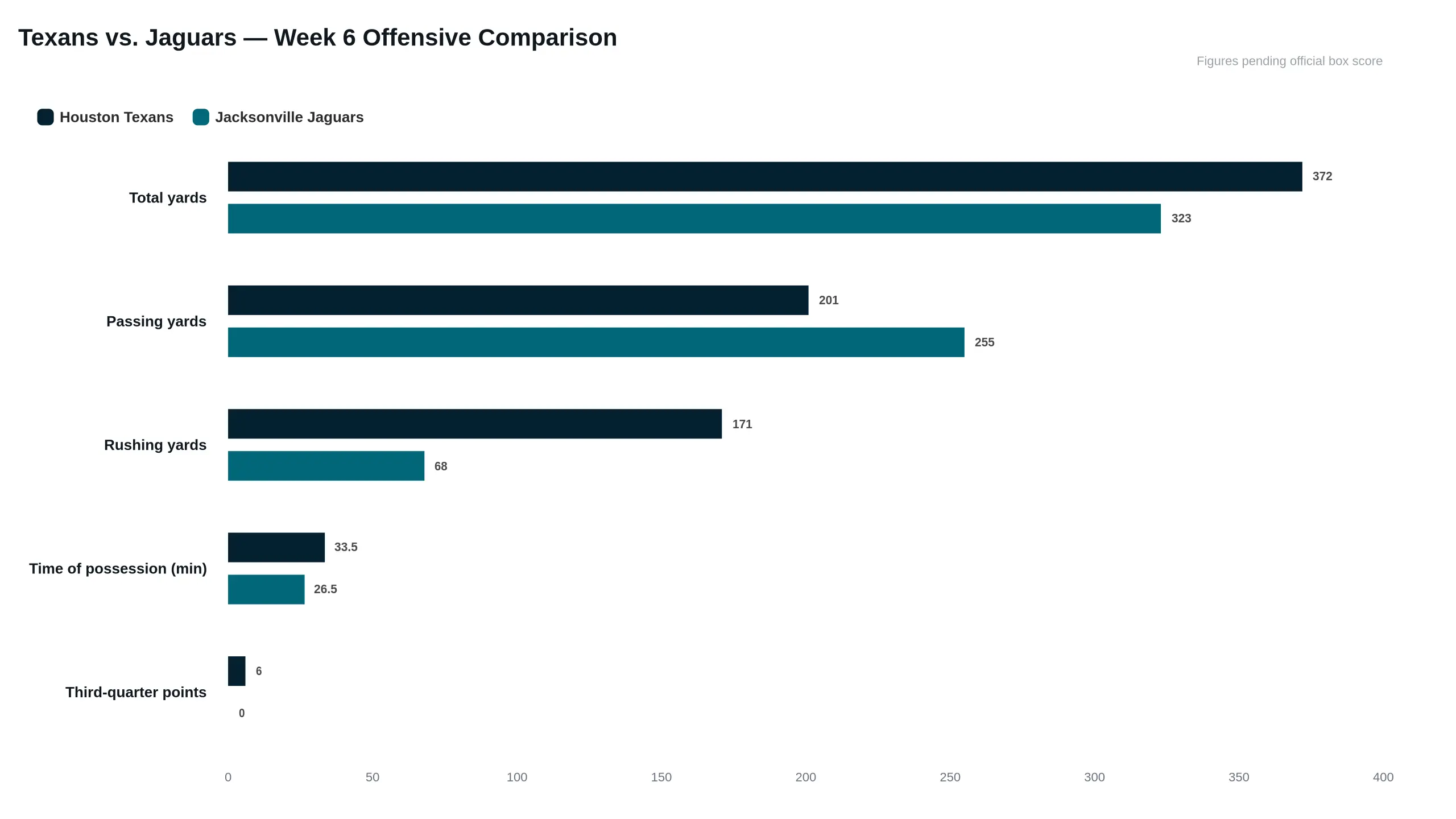
Two offenses that were hard to separate. Data subject to official final statistics.
The chart shows how little separated them for most of the afternoon: 426 total yards for Houston, 412 for Jacksonville, and time of possession within a minute of even. The difference was the third quarter, which Houston won 14-7 to turn a 17-14 halftime lead into 31-21. Then Little tied it, and Fairbairn won it.
It is still one game. A 2-4 team that beats the division leader on the road is 2-4. A 4-2 team that loses on the last kick is 4-2. But Houston has won two in a row, and Jacksonville heads into its bye thinking about a game it let reach the last snap.
A slip, a concussion, and the space between them
A walk-off kick is tidy: a build, a finish, a number. An official’s foot sliding out from under him is not. It interrupts the game people tuned in for, and it points at what a highlight package leaves out: twenty-two players running on a surface, in weather, with ankles and knees that answer to friction.
Reed Blankenship makes this harder to write cleanly. The Texans safety left in the first half and was listed with a concussion. No published report connects that injury to the turf, and I am not going to invent the connection to make the story tidier. Smith’s knee and Blankenship’s head are not one event.
Put them in the same afternoon, though, and the surface stops being scenery. A field that puts an official on a cart in the first quarter is a working condition, and working conditions get budgets, inspections and published measurements. This one mostly gets a paragraph in a game story and a slow-motion clip.
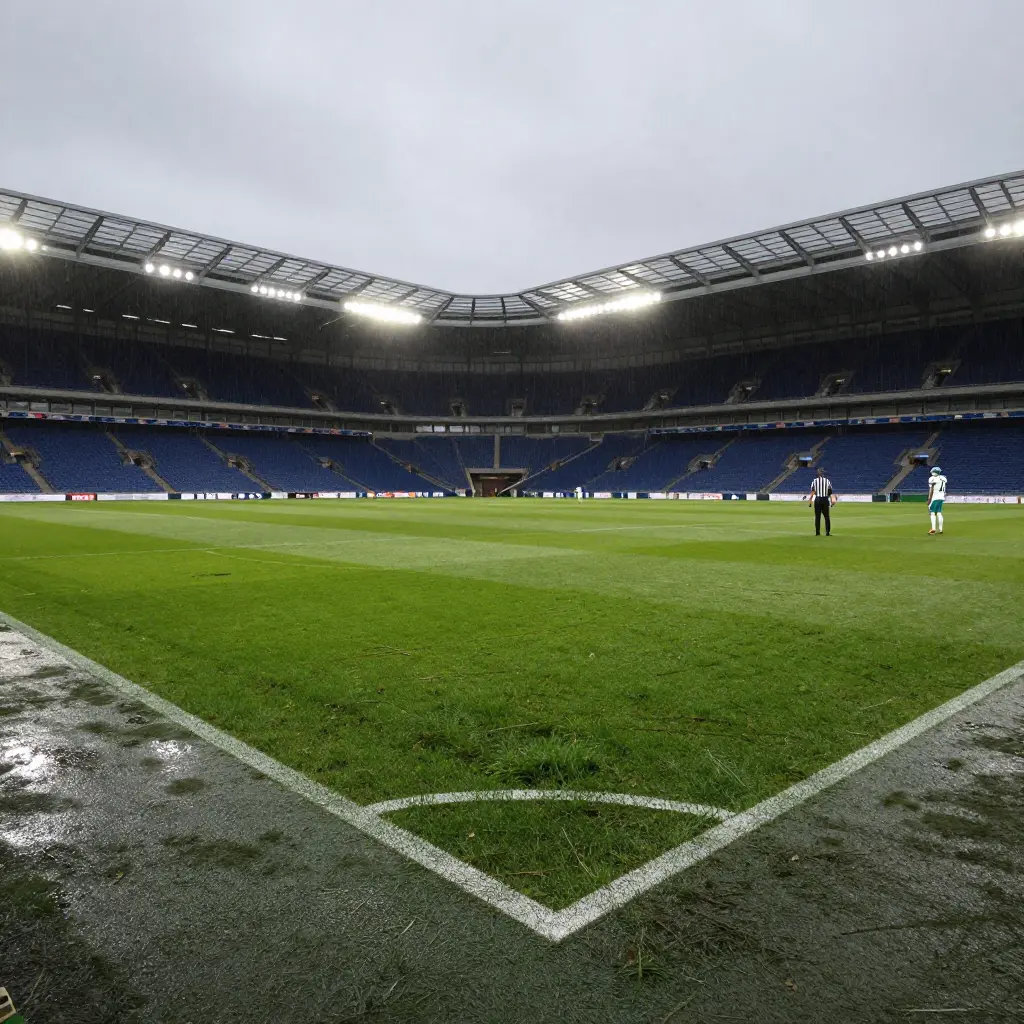
Wembley under floodlights, before the game.
International games are sold as spectacle, and the logistics behind them are real: a borrowed stadium, a pitch laid in rolls and shared with concerts, a visiting team that does not see the field until the weekend. Jacksonville has made the London trip more often than Houston. Neither team has had a week to learn how that grass behaves. None of it argues against playing in London; it is a list of costs, and the people in cleats absorb them.
Where I land
Rain and mud are football. Players slip. A dome for every game would be its own kind of nonsense.
The claim I would defend is narrower. If the surface can put an official on a cart in the first quarter, it belongs in the safety budget, not the color section. That means publishing what the field was like, planning for late-October weather in London, and treating an injured official as a staffing problem rather than an anecdote. All of it is cheaper than the alternative, and easier to argue with than a kick that already went through.
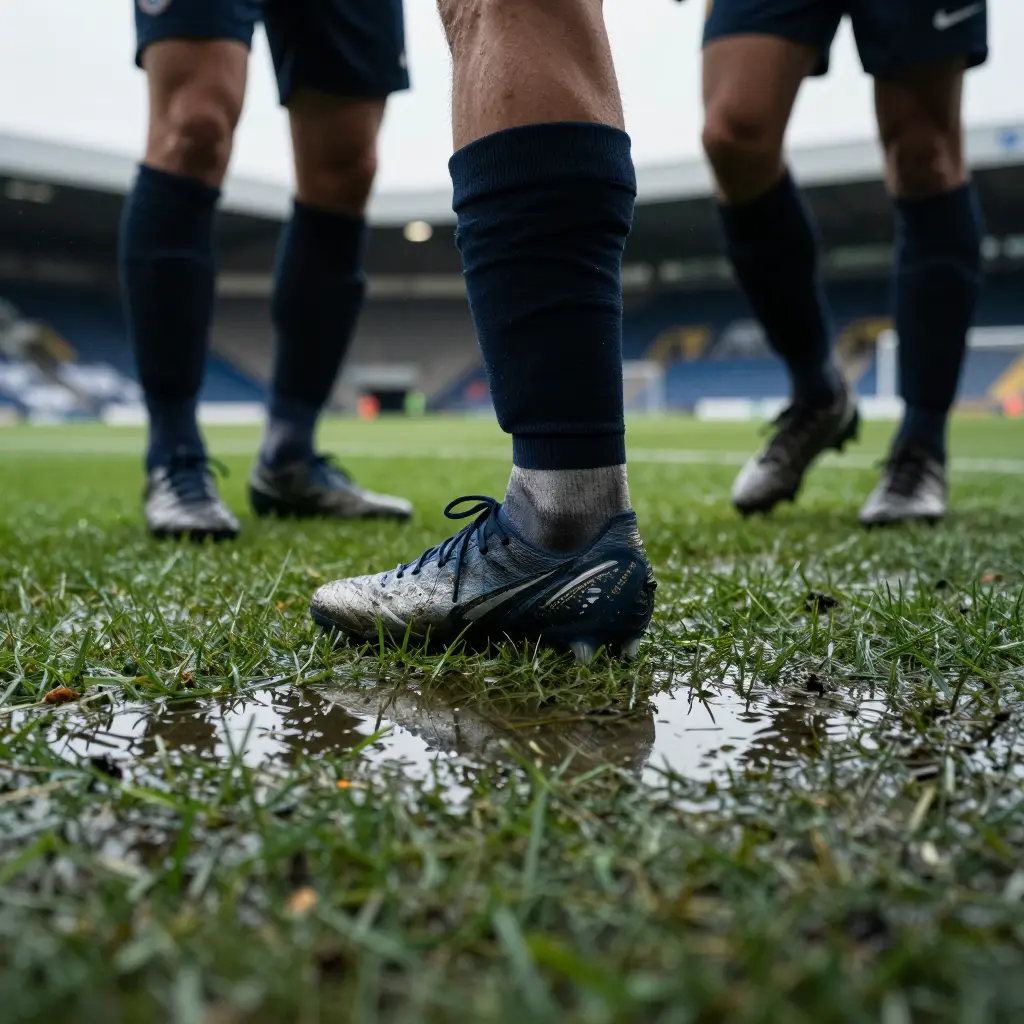
Cleats on wet grass.
Texans vs. Jaguars: quick answers
Houston won, and the grass kept making itself part of the story. Short answers to the questions people are asking:
Where was the game played?
Wembley Stadium in London, in the Week 6 international slot. It kicked off at 2:30 p.m. local time and was the first of the day’s 12 games.
Who won?
Houston, 34-31, on Ka’imi Fairbairn’s 49-yard field goal as time expired. C.J. Stroud went 24 of 34 for 312 yards, three touchdowns and one interception. For the official final score and full stat line, use the box score; corrections can change numbers after the fact.
How much did the wet grass affect the game?
It showed up early. Umpire Larry Smith slipped, hurt his knee and left on a cart in the first quarter, and Nico Collins switched to longer spikes during the first half. Dalton Schultz also slipped short of a first down on a drive that ended in a field goal. Beyond those incidents, there are no published measurements of how the surface held up. Reed Blankenship was listed with a concussion after leaving in the first half, and no report links that injury to the turf.
What does the result mean for the AFC South?
Houston is 2-4 after two straight wins. Jacksonville is 4-2 and still leads the division. It counts as a division road win for Houston and a home loss for Jacksonville, which matters for tiebreakers later. One October game in London does not settle the race, so check the standings before reading more into it.